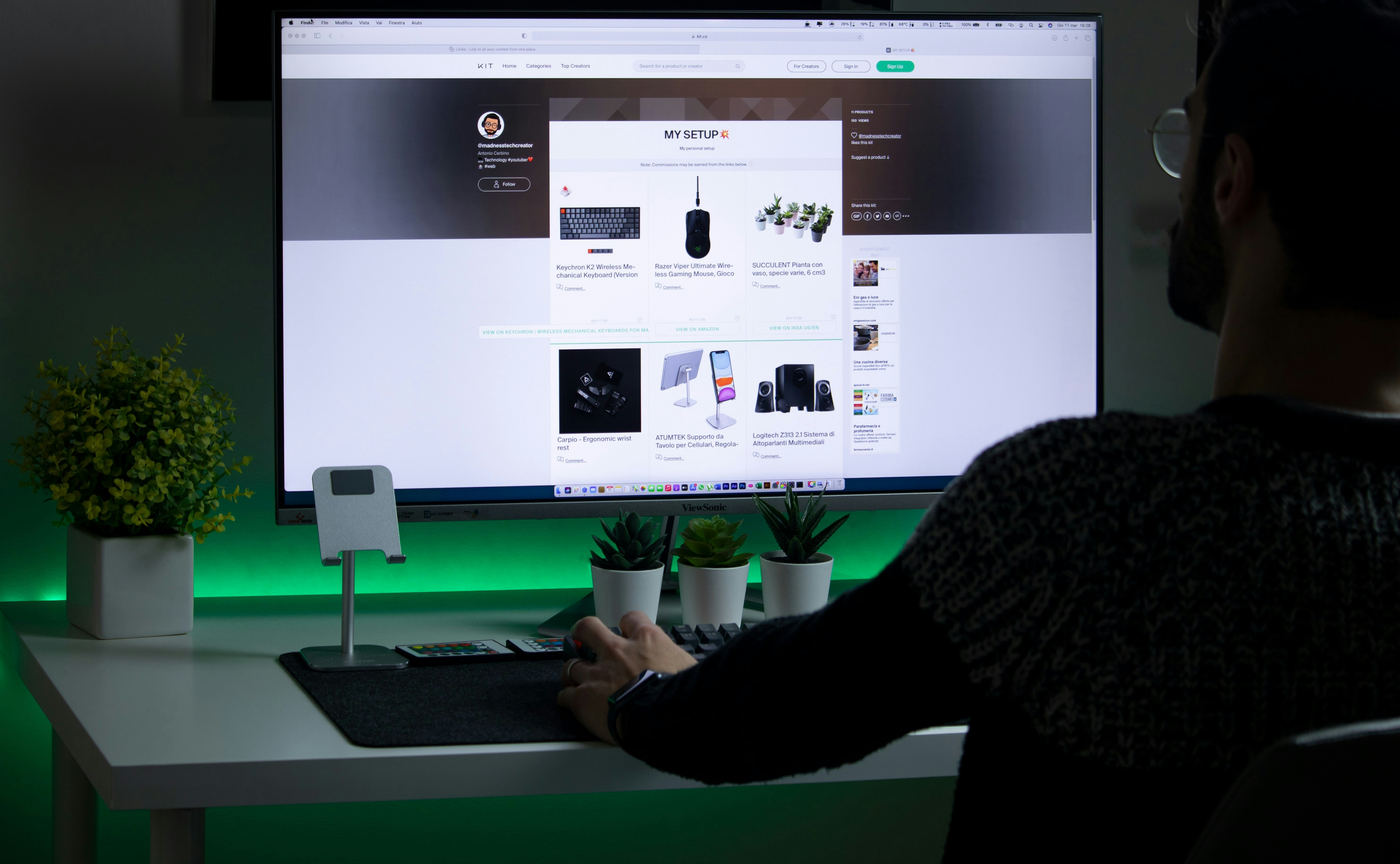
Your website often serves as the first point of contact between your business and potential customers. A user-friendly website layout isn’t just a nice-to-have feature—it’s a critical business asset that can significantly impact your bottom line. From improved conversion rates to enhanced brand perception, the benefits of prioritizing user experience in your website design are substantial and far-reaching.
What Do We Mean by a Website?
Before diving into the specifics of user-friendly layouts, let’s clarify what we mean by a “website.” At its core, a website is a collection of related web pages and digital content identified by a common domain name and published on at least one web server. Websites can be accessed via the internet using various devices, including computers, tablets, and smartphones.
Modern websites have evolved from simple text-based pages to complex, interactive platforms that serve numerous functions:
- Information sharing: Providing details about products, services, or topics
- E-commerce: Enabling online purchases and transactions
- Communication: Facilitating interaction between users or between users and organizations
- Entertainment: Offering games, videos, and other engaging content
- Software applications: Delivering web-based tools and services
A well-designed website incorporates both form and function, balancing aesthetic appeal with practical usability to create a seamless user experience.
The 10 Most Popular Websites and What They Teach Us About User-Friendly Design
Examining the world’s most visited websites provides valuable insights into effective user experience design. As of May 2025, these are the top 10 most visited websites globally:
- Google.com (105.4 billion monthly visits) – Known for its minimalist, search-focused interface
- YouTube.com (47.0 billion monthly visits) – Features intuitive video navigation and personalized recommendations
- Facebook.com (10.5 billion monthly visits) – Offers streamlined social connectivity and content discovery
- Instagram.com (5.9 billion monthly visits) – Provides visual-first, mobile-optimized experiences
- ChatGPT.com (5.2 billion monthly visits) – Delivers conversational AI with a clean, accessible interface
- Wikipedia.org (5.1 billion monthly visits) – Presents information-dense content in a navigable format
- Reddit.com (4.5 billion monthly visits) – Facilitates community engagement through organized content threads
- X.com (formerly Twitter) (3.9 billion monthly visits) – Offers real-time information in a concise format
- WhatsApp.com (3.0 billion monthly visits) – Provides straightforward messaging functionality
- Bing.com (3.0 billion monthly visits) – Features search with visual elements and integrated services
What’s striking about these top websites is that despite their different purposes, they share common user-friendly design principles. Google’s famously clean interface focuses users on its core functionality—search. YouTube organizes millions of videos in a way that makes content discovery intuitive. Facebook and Instagram prioritize content feeds and interactions, making social connections seamless.
These industry leaders understand that user-friendly website layouts directly contribute to their success. Let’s explore how your business can benefit from applying similar principles.
7 Key Benefits of User-Friendly Website Layouts for Your Business
- Increased Conversion Rates
A user-friendly website layout makes it easier for visitors to find what they’re looking for and take desired actions. When navigation is intuitive and the path to purchase is clear, conversion rates naturally improve.
Consider these statistics:
- Websites with simple navigation have conversion rates up to 219% higher than those with complex navigation systems
- A one-second delay in page load time can reduce conversions by 7%
- Mobile-optimized sites see an average of 64% higher conversion rates
Implementation tip: Conduct user testing to identify and remove friction points in your customer journey. Simplify forms, reduce required clicks, and ensure call-to-action buttons are prominent and compelling.
- Enhanced Customer Retention and Loyalty
When visitors have a positive experience on your website, they’re more likely to return. User-friendly website layouts create memorable, enjoyable interactions that build trust and foster loyalty.
- 88% of online consumers are less likely to return to a website after a bad experience
- Loyal customers spend an average of 67% more than new customers
- It costs 5-25 times more to acquire a new customer than to retain an existing one
Implementation tip: Incorporate personalization features that remember user preferences and provide tailored recommendations. Ensure your site loads quickly across all devices and offers consistent experiences across touchpoints.
- Improved Search Engine Rankings
Search engines like Google prioritize websites that provide excellent user experiences. User-friendly website layouts contribute to better SEO performance through reduced bounce rates, increased time on site, and higher engagement metrics.
- Websites that load in 2.5 seconds or less have 50% higher conversion rates
- User experience signals account for approximately 39% of Google’s ranking factors
- Mobile-friendly websites are 51% more likely to rank higher in search results
Implementation tip: Focus on core web vitals like page load speed, interactivity, and visual stability. Implement responsive design to ensure your site performs well on all devices.
- Reduced Support Costs
When your website is intuitive and easy to navigate, users can find information and complete tasks without assistance. This self-service capability significantly reduces customer support inquiries and associated costs.
- Self-service interactions cost approximately $0.10 compared to $8-$12 for live support interactions
- 70% of customers expect a company’s website to include self-service options
- Effective self-service can reduce support tickets by up to 50%
Implementation tip: Create a comprehensive FAQ section, implement search functionality, and provide clear instructions for common processes. Consider adding chatbots for immediate assistance with simple queries.
- Stronger Brand Perception and Trust
A professionally designed, user-friendly website layout reflects positively on your brand. It communicates competence, reliability, and customer-centricity—all crucial factors in building trust with potential customers.
- 94% of first impressions are design-related
- 75% of consumers judge a company’s credibility based on their website design
- 38% of users will stop engaging with a website if the layout is unattractive
Implementation tip: Ensure your website design aligns with your brand identity. Maintain consistent colors, typography, and messaging. Showcase security badges, customer testimonials, and trust signals prominently.
- Higher Average Order Values
User-friendly website layouts can encourage customers to spend more through strategic cross-selling, upselling, and simplified checkout processes.
- Effective product recommendations can increase average order value by 10-30%
- Streamlined checkout processes can reduce cart abandonment by up to 35%
- Clear pricing and shipping information can increase purchase confidence by 80%
Implementation tip: Implement related product suggestions, bundle offers, and quantity discounts. Minimize distractions during checkout and provide multiple payment options.
- Competitive Advantage
In crowded markets, user experience can be a significant differentiator. A superior website layout can set your business apart from competitors and become a sustainable competitive advantage.
- 86% of buyers are willing to pay more for a better customer experience
- 89% of consumers have switched to a competitor after a poor customer experience
- Companies that lead in customer experience outperform laggards by nearly 80%
Implementation tip: Regularly benchmark your website against competitors. Identify gaps in the user experience and prioritize improvements that will create meaningful differentiation.
10 Essential Elements of a User-Friendly Website Layout
To realize these benefits, focus on incorporating these key elements into your website design:
- Intuitive Navigation
Navigation should be simple, consistent, and predictable. Users should be able to find what they’re looking for within three clicks. Consider implementing breadcrumb navigation, clear menu structures, and search functionality. - Responsive Design
Your website must function seamlessly across all devices and screen sizes. Responsive design ensures that layouts, images, and functionality adapt automatically to provide optimal experiences regardless of how users access your site. - Fast Loading Speeds
Every second counts when it comes to page load times. Optimize images, leverage browser caching, minimize HTTP requests, and consider implementing AMP (Accelerated Mobile Pages) for critical content. - Clear Call-to-Actions
Guide users toward desired actions with prominent, descriptive CTAs. Use contrasting colors, action-oriented language, and strategic placement to increase click-through rates. - Readable Typography
Choose fonts that are easy to read across devices. Maintain appropriate font sizes (minimum 16px for body text), adequate line spacing, and sufficient contrast between text and background colors. - Logical Content Hierarchy
Organize information in a way that guides users naturally through your content. Use headings, subheadings, bullet points, and white space to create visual hierarchy and improve scanability. - Accessible Design
Ensure your website is usable by people with various disabilities. Implement alt text for images, ensure keyboard navigation, maintain appropriate color contrast, and follow WCAG (Web Content Accessibility Guidelines) standards. - Consistent Layout
Maintain consistency in design elements throughout your website. Use the same navigation structure, color scheme, button styles, and terminology across all pages to create a cohesive experience. - Error Prevention and Recovery
Design forms and interactive elements to prevent errors before they occur. When errors do happen, provide clear, helpful messages that guide users toward solutions. - Performance Optimization
Regularly monitor and optimize your website’s performance. Use tools like Google PageSpeed Insights, GTmetrix, or Lighthouse to identify and address performance bottlenecks.
Measuring the Impact of User-Friendly Website Layouts
To quantify the benefits of your user-friendly website layout, track these key metrics:
- Conversion rate: The percentage of visitors who complete desired actions
- Bounce rate: The percentage of visitors who leave after viewing only one page
- Average session duration: How long visitors spend on your site
- Pages per session: How many pages visitors view during each visit
- Customer satisfaction scores: Direct feedback from users about their experience
- Task completion rate: The percentage of users who successfully complete specific tasks
- Return visitor rate: The percentage of visitors who come back to your site
Regularly analyzing these metrics will help you identify areas for improvement and demonstrate the ROI of your user experience investments.
Conclusion – Webawesome Can Help With Your Next Website Project
A user-friendly website layout is far more than an aesthetic consideration—it’s a strategic business asset that can drive significant improvements in customer acquisition, retention, and revenue generation. By studying the world’s most successful websites and implementing proven design principles, you can create digital experiences that delight users and deliver measurable business results.
In today’s competitive digital landscape, businesses that prioritize user experience gain a distinct advantage. Whether you’re launching a new website or optimizing an existing one, investing in user-friendly design is one of the most effective ways to enhance your online presence and achieve your business objectives.
Remember, your website isn’t just a digital brochure—it’s often the first and most important touchpoint in your customer relationship. Make it count by creating an experience that’s intuitive, efficient, and enjoyable.
Ready to transform your website into a powerful business tool? Contact webawesome.co.uk today to learn how our user-centered design approach can help your business thrive online.
Reach out to us using the contact form or send us an email at info@webawesome.co.uk